

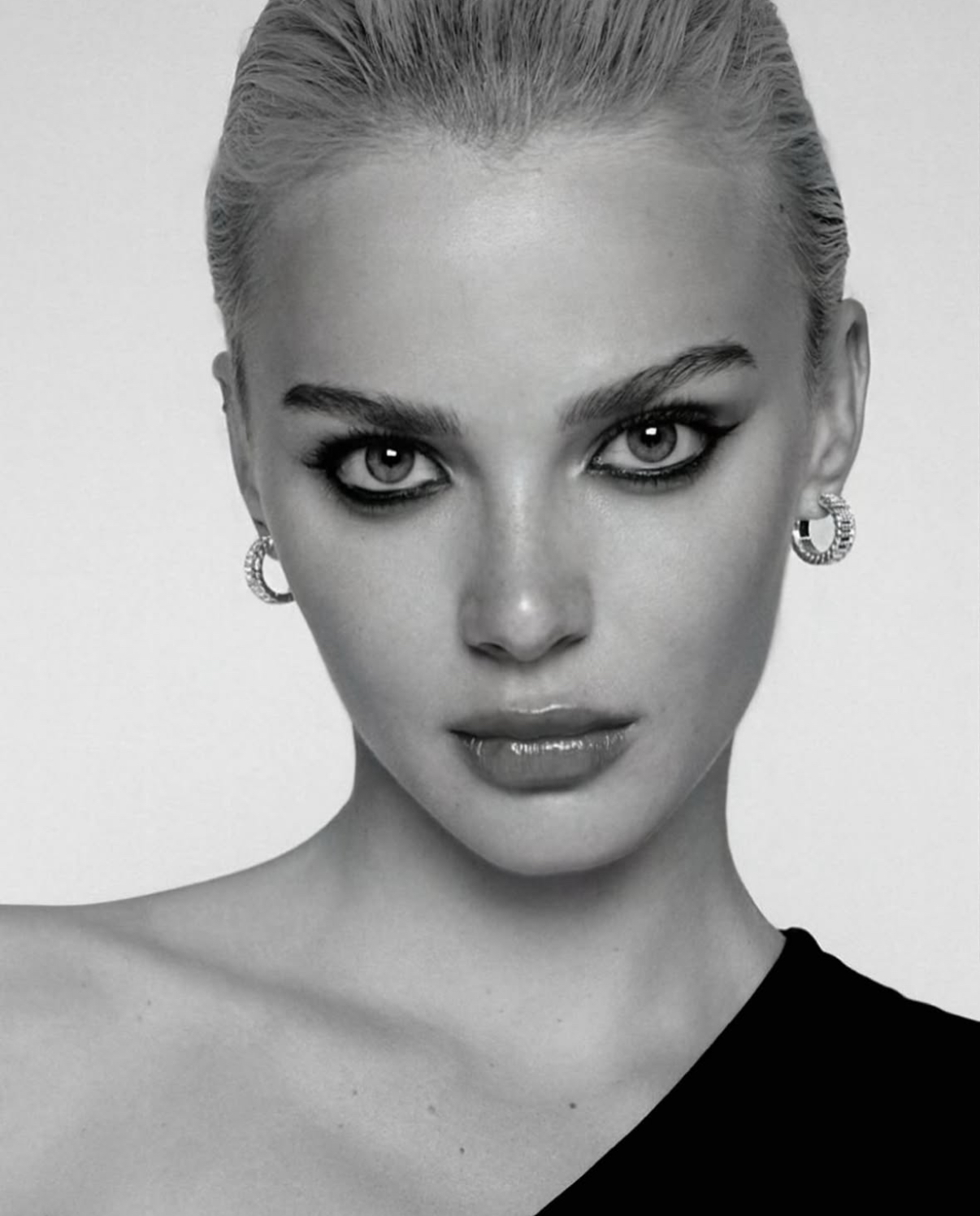

The career of Katerina Sparkish is a vivid illustration of how runway discipline and creative freedom can shape an entirely new model of success. Having started in Europe — from Milan to Barcelona — she quickly entered the international arena, shooting for Rimmel London in New York and later for Kylie Cosmetics, Makeup by Mario, Armani Beauty, NARS, and Too Faced. Today, Katerina lives in New York, works with the world’s leading makeup artists, appears in Vogue, ELLE, Glamour, Dazed, and her face lights up Times Square billboards. In her blog, fashion is intertwined with intellectual irony, cultural codes, and a personal lens on the industry. We talked to Katerina about her milestones, meanings, and how to stay authentic in a world where everyone wants to be heard.
Your professional journey feels both intentional and remarkably alive. What became the true starting point of your international career?
— I’ve been in the industry for more than thirteen years. It all began with shoots across Europe — Milan, London, Barcelona — for Zara, Diesel, Bershka, Urban Outfitters. It was a great school: speed, stamina, and the ability to work without illusions.
In 2017, I came to New York for the first time, and the Rimmel London campaign became the symbolic beginning of a new chapter. Today I collaborate with Kylie Cosmetics, MAC, NARS, Revlon, Armani Beauty, Makeup by Mario, and Patrick Ta. The beauty sector gave me scale — it became the foundation of my international portfolio and my recognizable style.
Your name is increasingly associated not only with modeling but with influence. When did you realize you were shaping not just images, but opinions?
— I think you feel it through the people you work with. Mario Dedivanovic, Carolina Gonzalez, Bobbi Brown, Priscilla Ono — names that make you understand you’re being taken seriously.
Publications in Vogue, Dazed, ELLE, Glamour, Cosmopolitan are also markers of recognition. And of course, the moment my photos appeared on Times Square billboards. I joked then: “Well, I guess I’ve passed my New York exam.”
You frequently take part in collaborations. What makes a project truly meaningful to you?
— When there is an idea behind it. For example, Kylie Cosmetics and Makeup by Mario campaigns — they’re not just advertising, they’re the visual language of the moment, which the industry later echoes.
I especially love working with designer Jackson Wiederhoeft, a CFDA Awards nominee. His creations are modern couture: refined, theatrical, alive. Being part of his shows means not simply being “in the frame,” but becoming part of an aesthetic chronicle.
Your visual style is instantly recognizable. How would you describe it?
— My image is always about atmosphere — a sense of movement and life. I don’t love a “pure pose”; I want the viewer to feel a story behind the photo.
In my blogs, I eventually found my language — a mix of fashion, philosophy, psychology, a bit of history and even economics, all delivered with irony and intellect. That blend became my signature: not just a visual, but a thought wrapped in aesthetics.
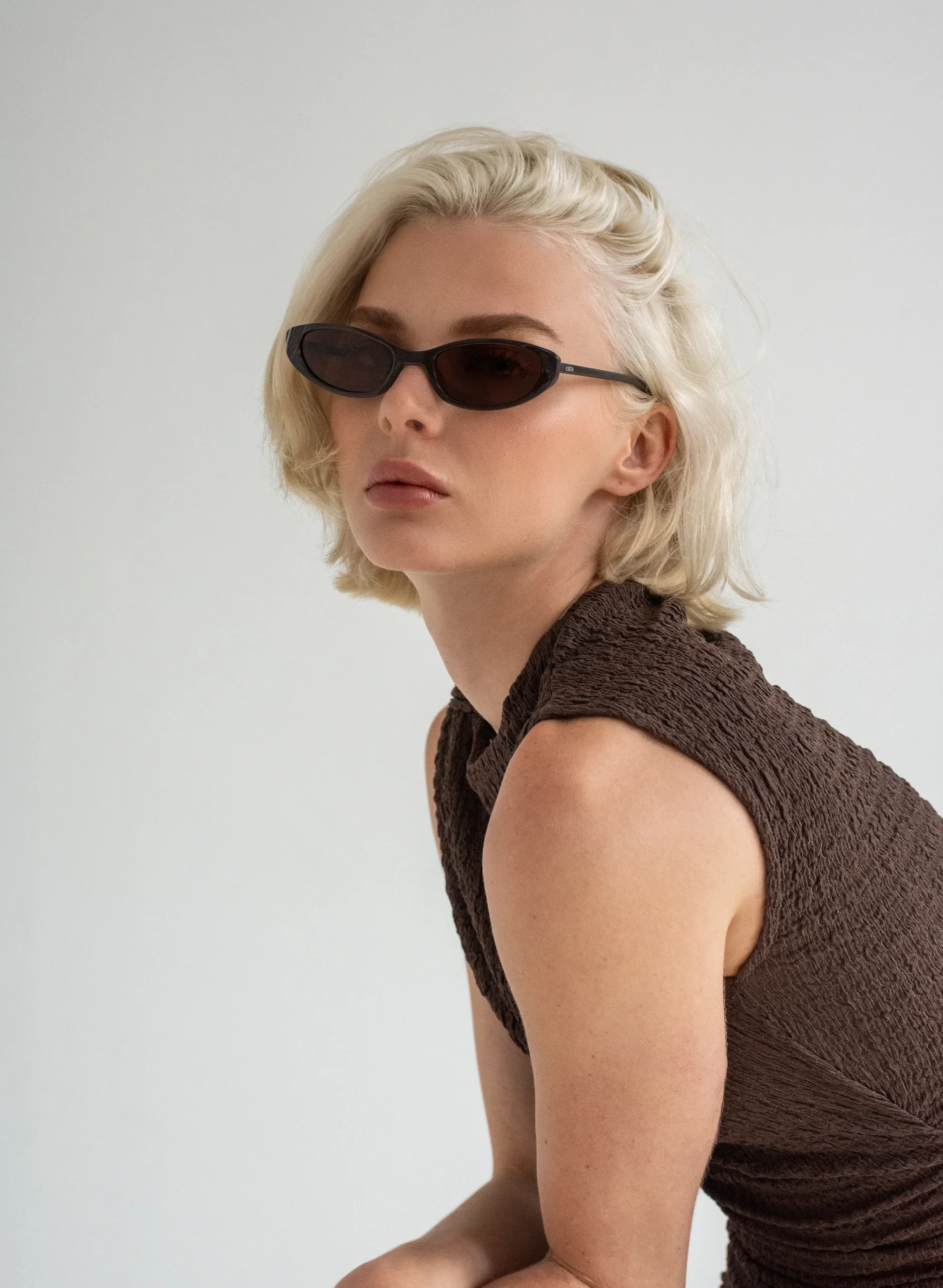
Your audience is impressive. How do you build that connection, and where do you see the balance between influence and individuality?
— For me, numbers are not the goal but the result of trust. On Instagram (Meta, designated extremist and banned in Russia) I combine fashion, culture, and self-reflection.
The audience grows organically — more than 150,000 new followers in recent months, with some videos reaching millions of views. But growth brings responsibility: maintaining a tone of respect, honesty, and meaning is essential. People feel when the conversation is real.
You’re often described as a phenomenon at the intersection of fashion and intellectual content. Do you agree?
— Yes, I would say I’m exactly there — between two worlds. On the one hand, I’m a model who worked with agencies like Next, Elite, Wilhelmina, Storm. On the other — an author speaking to the audience as equals.
I like that people expect not just an image from a model, but a position. I believe this combination — visuals and thought — is what shapes the new reality of fashion.
What moment felt like the strongest confirmation of recognition within the industry?
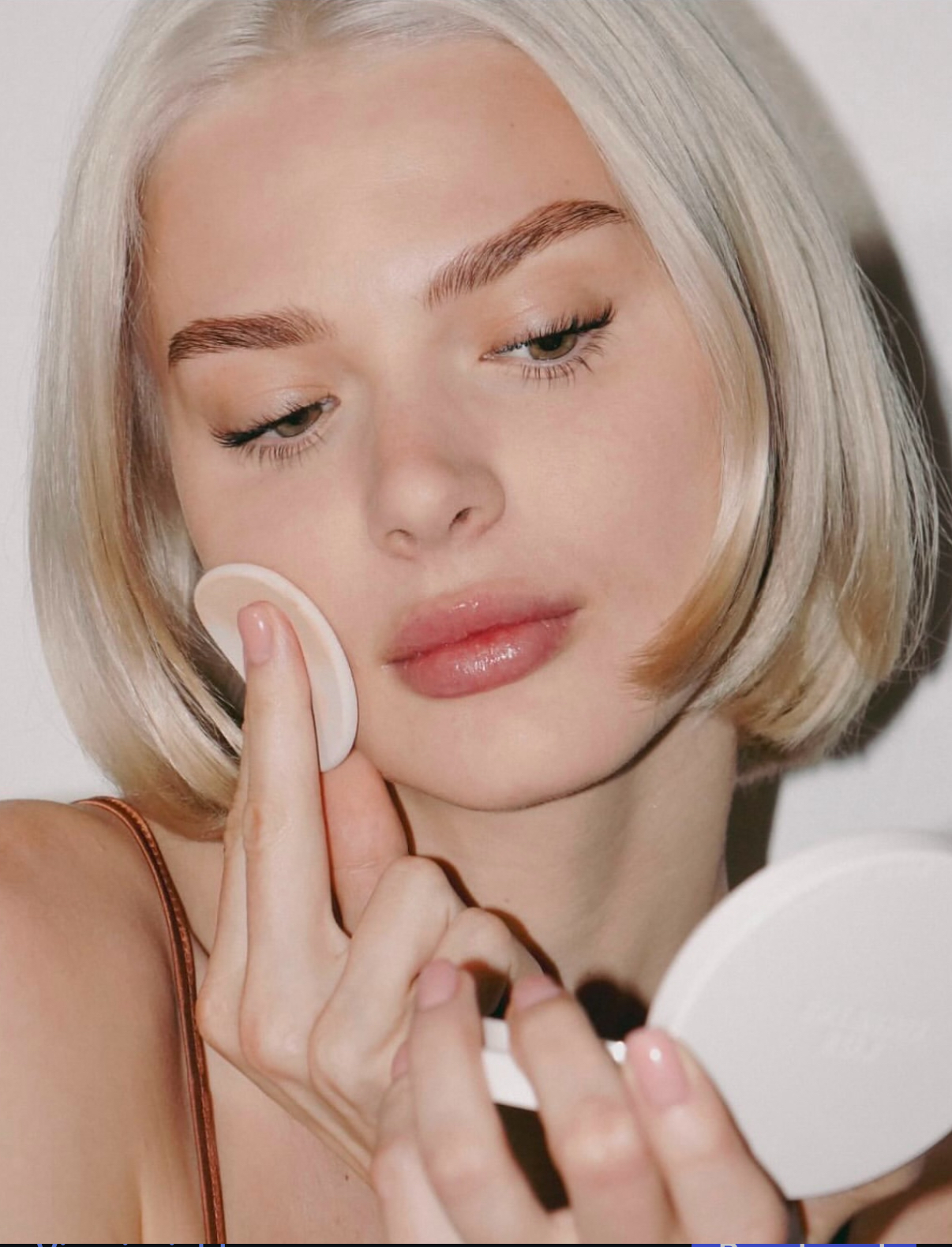
— Without doubt, a publication in Vogue. It’s the moment when you realize: everything you’ve done was worth it.
And then there was contrast. After a Guess shoot, Daily Mail ran a piece comparing me to Pamela Anderson. I smiled: Vogue stands for status, Daily Mail represents mass culture. Together they reflect the full spectrum — from high fashion to its pop version. And I feel comfortable in both.
What goals are you pursuing now?
— I have two directions. The first is professional: there are people and brands I dream of working with. The second is authorial: developing my own content.
I’m convinced that fashion stopped being “just an image” long ago. Today, a model can be a mediator of meaning — someone who shapes the mood of the time and helps the world sound a little smarter.
Your content often becomes part of public conversations. When did you realize that was happening?
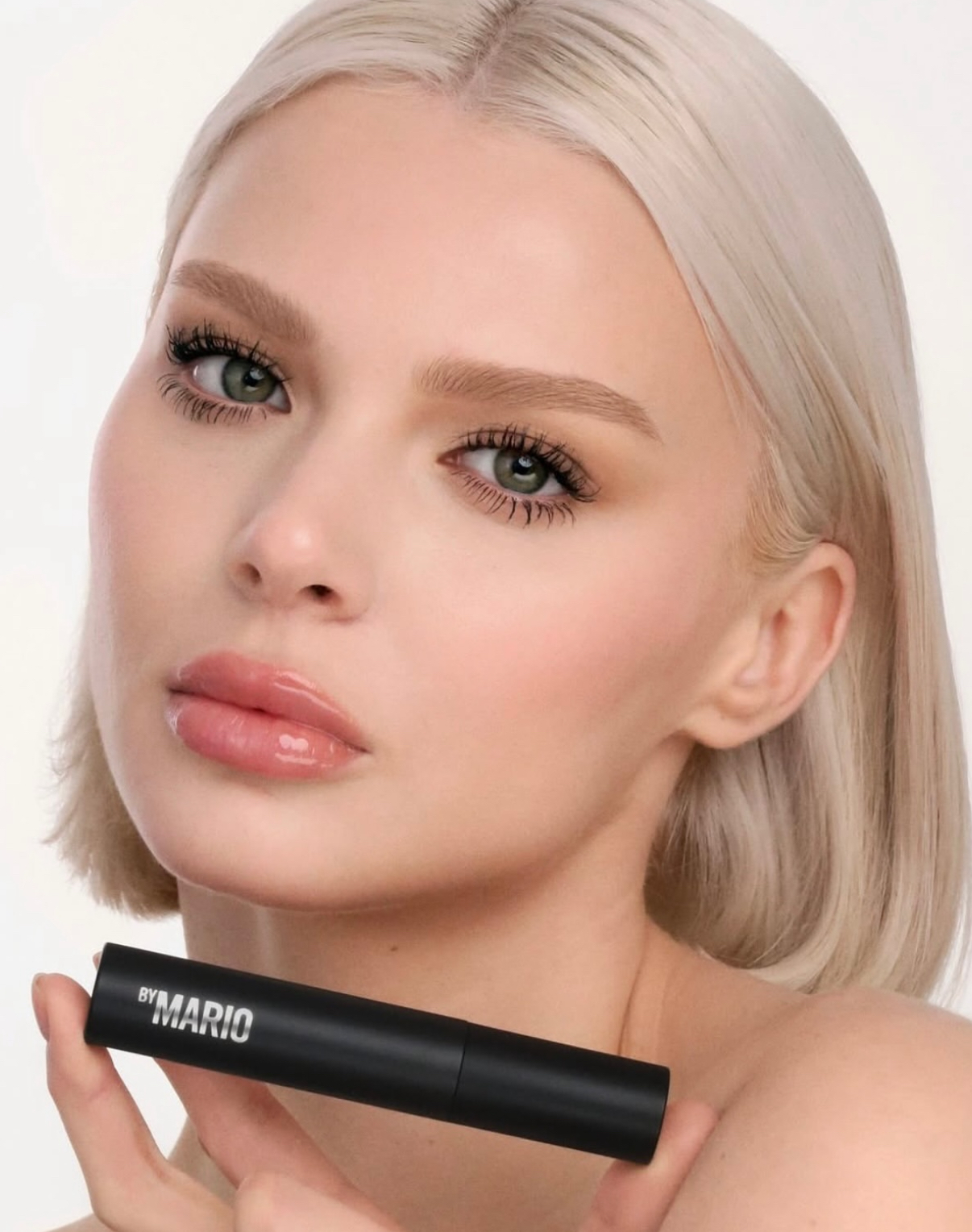
— Probably when people from completely different fields began writing to me — actors, producers, psychologists, journalists. That meant the content stopped being “about me” and became something bigger.
For me, the best outcome is when someone feels inspired, starts reading philosophy, or rethinks their relationship with themselves and culture. That, to me, is the true mission of a modern influencer.
How do you create what sets you apart among countless fashion bloggers?
— I don’t try to surprise people — I try to be honest. My format is a mix of fashion, psychology, philosophy, history, and finance, presented with ease and a touch of self-irony.
This synthesis works: the content goes viral because people want not only to “watch,” but to think and feel.
The fashion world evolves rapidly. How do you maintain your inner growth?
— I’m constantly learning — from colleagues, from shoots, from myself. I speak a lot with young models; sometimes one word of support matters more than a contract.
Blogging taught me editing, scripting, producing. It’s growth in every sense — never stopping, seeking new tones, staying curious.